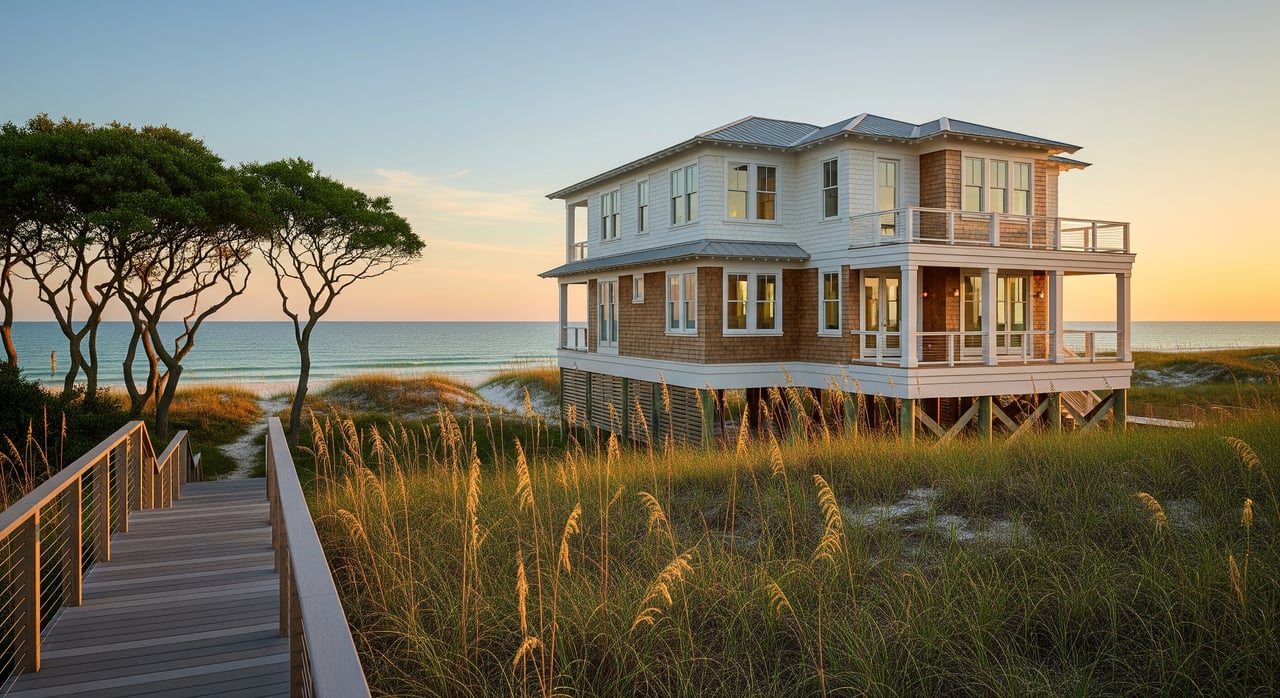
Building your Emerald Coast home on a lot you own can feel exciting and a little overwhelming. You want the beach lifestyle and a house that fits your needs, but coastal rules, flood zones, and timelines add real complexity. This guide simplifies the on-your-lot process in Panama City Beach and Bay County so you can plan with confidence. You’ll learn what approvals you need, how coastal hazards affect design and budget, and the steps from due diligence to move-in. Let’s dive in.
What on-your-lot building means
On-your-lot building is when you select a floorplan and builder, then construct on land you already own or plan to buy. It works well if you love a specific neighborhood, want modern performance features, or prefer new construction without paying a resale premium for coastal proximity. You control location and design choices while your builder manages engineering, permitting, and construction. In Bay County, coastal conditions and local rules make early planning essential.
Emerald Coast rules that shape your plan
Florida Building Code and wind design
Your home must meet the Florida Building Code. Along the coast, that means engineering for high wind loads, hurricane tie-downs, and code-compliant opening protection. Local wind speed maps guide design, inspections, and documentation. Confirm any Bay County or City of Panama City Beach amendments with the local building department before finalizing plans.
FEMA flood zones and elevation
Many Panama City Beach and Bay County lots sit in FEMA flood zones such as AE or VE. Your property’s Base Flood Elevation sets the minimum finished-floor elevation and often drives foundation type, like pilings or elevated slabs. In coastal VE zones, rules are stricter and insurance can cost more. Plan for an Elevation Certificate during permitting and again at key build milestones.
Coastal permitting and the CCCL
Beachfront and dune-area lots can trigger Florida’s Coastal Construction Control Line requirements. You may need state coastal permits, plus county or city approvals, which can set where and how you build on dunes, wetlands, or along shorelines. Expect setbacks and potential mitigation. A coastal survey and early conversations with the appropriate agencies help you avoid surprises.
Zoning, setbacks, and HOAs
Bay County and the City of Panama City Beach regulate setbacks, height limits, allowed uses, and floodplain development standards. If your lot is in a subdivision, HOA covenants and architectural review may guide exterior design, colors, and materials. Get the CC&Rs and planning guidance early so your plans align with local rules.
Utilities: sewer or septic
Not every lot has sewer access. Some parcels will use septic, which affects allowable home size, system placement, and cost. Confirm water, sewer, electric, gas, stormwater, and telecom availability. Connection charges and off-site extensions can add meaningful time and fees, so you want written utility confirmations before you commit.
Lot due diligence in Bay County
Survey and title details
Order a current boundary survey with topography and visible setback lines. Review the title commitment for easements or restrictions that affect where you can build. This is critical on coastal parcels where drainage and access easements are common.
Elevation, drainage, and BFE
Small elevation differences matter. If the lot sits below BFE, you may need fill or an elevated foundation. Confirm neighborhood drainage and storm infrastructure. Historical ponding or tidal impacts can affect site design and timeline.
Soil and foundation needs
Coastal soils are often sandy with higher water tables. A geotechnical report will recommend bearing capacity and whether you need piles or other specialized foundations. Plan to order this report before you lock your plans or contract pricing.
Environmental checks
If wetlands or dunes are present, you may need delineations and specific state or local clearances. Setbacks along waterways or protected areas can reduce the buildable footprint. Confirm these factors during your inspection period.
Utility confirmations and access
Ask for written utility availability and connection fees. If the road or frontage needs improvements like drive aprons or culverts, clarify who is responsible. Include realistic timelines for taps and inspections in your overall schedule.
The build process and typical timeline
Every site is different, but your path usually follows this sequence:
- Buy the lot and complete a title search.
- Run due diligence: survey, soils/geotech, flood zone and BFE checks, utilities, HOA rules.
- Get pre-approved for a construction loan or a lot loan plus construction financing.
- Move from concept to construction plans, then engineering that reflects geotech results and code.
- Apply for permits with Bay County or the City of Panama City Beach, plus any state coastal permits if required.
- Prep the site: clearing, grading, erosion control, driveway.
- Build the foundation: piles or footings, verify elevation.
- Build the shell: framing, roofing, windows and doors.
- Install mechanical, electrical, plumbing, HVAC, insulation, and drywall.
- Finish interiors and exteriors, complete final inspections, then receive your Certificate of Occupancy.
Permitting can take weeks to several months depending on complexity. After permits, custom coastal builds commonly range from about 9 to 18 months to completion. Weather, material availability, and specialty trades can extend the schedule, so include contingency time.
Contracts and builder selection
Contract types
- Fixed price: common when plans and specifications are complete.
- Cost plus: you pay actual costs plus a fee, which can allow more owner-driven selections.
- Design-build: one team handles both design and construction to simplify coordination.
- Owner-builder: possible, but some lenders and insurers limit this path and it increases your workload and risk.
Choosing a coastal-experienced builder
Pick a team with local coastal experience, including pile foundations, wind design, and FEMA documentation. Verify licensing, references, insurance, and examples of Bay County or Panama City Beach projects. Ask how the builder manages schedule, change orders, and storm-related contingencies.
Warranties and specifications
Your agreement should clearly define the scope, schedules, milestone payments, change-order process, and warranty terms. Ask for details on wind mitigation features and opening protection. Document product specifications so expectations are clear.
Financing and insurance essentials
Construction loans
Most lenders fund draws at set stages of work and require complete plan sets, builder approval, and contingency reserves. Many loans convert to a permanent mortgage at completion. In coastal zones, lenders often review elevation, builder qualifications, and insurance availability.
Flood insurance
If your property is in a Special Flood Hazard Area and you use a mortgage, lenders typically require flood insurance. Premiums depend on zone, elevation, and coverage limits. An Elevation Certificate often helps underwriting and may affect cost.
Windstorm and homeowner coverage
Along the coast, windstorm or hurricane coverage may be separate or mandatory. Insurers commonly require wind mitigation features like impact-rated openings or shutters. Premiums vary by location, elevation, and construction details.
Taxes and homestead
Florida homestead rules can affect your annual tax bill if you qualify. Check filing steps and deadlines with the Bay County Property Appraiser.
Cost drivers on the Emerald Coast
- Elevation and foundation type tied to BFE and soils.
- Utility extensions, septic systems, and drainage improvements.
- Coastal and environmental permits or mitigation.
- Hurricane-resistant products for windows, doors, and roofing.
- Flood and wind insurance premiums.
- Local impact and permitting fees.
- Labor and materials from coastal contractors, especially after storms.
Your step-by-step checklist
Before you buy the lot
- Get a current boundary and topo survey and a flood zone determination.
- Order a title commitment and review easements and CC&Rs.
- Confirm utility availability and connection fees in writing.
- Order a soils and geotechnical report.
- Verify zoning, setbacks, and height limits with the county or city.
- Ask about coastal or environmental permits that may apply.
- Confirm HOA requirements and architectural review steps.
- Get preliminary estimates from local coastal builders, including foundation assumptions.
- Speak with a lender about lot and construction loan requirements.
- Talk with an insurance broker about flood and wind coverage and budget ranges.
Before you break ground
- Finalize plans and engineering to meet the Florida Building Code and local standards.
- Secure all required permits at the county, city, and state level as needed.
- Verify builder licensing and insurance and sign a detailed contract.
- Plan for temporary housing and potential delays during storm season.
- Schedule elevation certificates and required inspections at the right build stages.
Local offices and pros to contact
- Bay County Development Services and Building Department for permits, inspections, and zoning.
- City of Panama City Beach Building and Planning Departments for city parcels.
- Bay County Property Appraiser for parcel data and tax questions.
- Florida Department of Environmental Protection for CCCL and coastal permits.
- FEMA Flood Map Service Center for FIRMs and Base Flood Elevations.
- Northwest Florida Water Management District for wetlands and water table guidance.
- Local coastal land surveyor, geotechnical engineer, structural engineer, licensed builder, septic designer if needed, real estate attorney, lender familiar with construction loans, and an insurance broker experienced in flood and wind.
How Tracewater Homes fits your build
If you want a predictable path to a durable coastal home, a documented process makes a big difference. Tracewater Homes focuses on building on your lot across the Emerald Coast, including Panama City Beach and Bay County. You get adaptable, design-forward plans and a clear 12-step client journey that keeps each decision and milestone visible. Performance-focused construction materials, energy-conscious design, and smart-home readiness aim to reduce long-term ownership costs.
You can select from productized floorplans that balance choice and efficiency, then tailor to your site’s elevation, wind, and flood needs. A builder with coastal experience understands how BFE, soils, and CCCL permitting affect foundations and timelines. When you pair the right plan with the right engineering and permitting path, you can move from concept to keys with fewer surprises.
Ready to plan your on-your-lot build in Panama City Beach or Bay County? Start your conversations early, gather your due diligence documents, and work with a coastal-experienced team that can guide you from first survey to final inspection.
FAQs
What is on-your-lot building in Panama City Beach?
- It means selecting a builder and plan, then constructing on land you own within Bay County or the City of Panama City Beach. Your design, foundation, and timeline must meet the Florida Building Code, local zoning, and any coastal or floodplain rules.
How do flood zones affect my home design?
- Your FEMA flood zone and Base Flood Elevation set the minimum finished-floor elevation. That often leads to elevated slabs or pile foundations, especially in AE and VE zones, which can change cost and insurance.
Do beachfront lots need extra permits?
- Many do. Lots near dunes or seaward of the Coastal Construction Control Line can require state and local coastal permits, in addition to standard building permits.
How long does the permitting and build process take?
- Permitting can range from weeks to several months, depending on site complexity and coastal reviews. After permits, custom coastal builds commonly take about 9 to 18 months, with weather and materials affecting timing.
What financing should I expect for an on-your-lot build?
- Most buyers use a construction loan that funds in draws and then converts to a permanent mortgage at completion. Lenders typically require full plans, builder approval, and reserves.
Will I need flood and wind insurance?
- If you finance a home in a Special Flood Hazard Area, your lender will typically require flood insurance. In coastal Florida, windstorm or hurricane coverage may be separate or mandatory, and insurers often require wind mitigation features.