Wondering if a new build in Okaloosa County can do double duty as a beautiful coastal home and a short-term-rental-ready investment? The answer is yes, but the design has to do more than look good in listing photos. If you want a home that fits local rules, supports smooth turnovers, and holds up to Gulf Coast conditions, you need to make smart decisions early. Let’s dive in.
Why Okaloosa County stands out
Okaloosa County has a strong visitor economy that shapes what works in a short-term rental. According to the county’s 2024 Annual Comprehensive Financial Report, visitor spending exceeds $3.18 billion each year, tourism-related businesses employ more than 49,394 people, and the area draws about 8 million visitors annually.
That matters if you are building with rental use in mind. You are not designing only for full-time local living. You are designing for short stays, family travel, beach gear, boating days, and repeat guest turnover in a market built around tourism.
Start with the right jurisdiction
Before you choose a floorplan, confirm exactly where the lot sits. A parcel in Destin, Fort Walton Beach, or unincorporated Okaloosa County may fall under different local processes and standards.
This step is easy to overlook, but it affects how you plan the home. Registration, occupancy, parking, inspections, and code enforcement can vary by jurisdiction, so site selection should come before detailed design.
State rules still shape the plan
Under Florida law, a vacation rental is generally treated as a type of transient public lodging establishment. The Florida Department of Business and Professional Regulation says owners of new public lodging establishments must obtain a license before operating, and an entire unit is generally in scope if it is rented more than three times in a calendar year for periods under 30 days, or if it is regularly advertised for guest stays.
Florida law also says local governments may not prohibit vacation rentals or regulate the duration or frequency of stays. Even so, local governments can still enforce rules tied to building code, fire code, occupancy, parking, signage, solid waste, and similar operational issues.
Local rules matter in Okaloosa County
Okaloosa County says it may regulate occupancy, require short-term-rental registration, require onsite posting, impose inspections, and regulate parking, solid waste, and evacuations. The county also notes that properties on Okaloosa Island may be subject to protective covenants and restrictions.
That means parcel-level review matters. A lot may look perfect on paper, but restrictions tied to the property or jurisdiction can affect how practical your plan really is.
Design for occupancy and parking together
One of the biggest mistakes in a short-term-rental-ready build is chasing bedroom count without thinking through the site. In Destin, annual registration is required, and overnight occupancy is capped at 2 adults per bedroom plus 4 additional persons, with a hard cap of 24 overnight guests.
That makes bedroom count only part of the equation. If the lot cannot support legal parking and easy arrival patterns, adding more sleeping rooms may not improve the home’s rental function.
Focus on guest flow
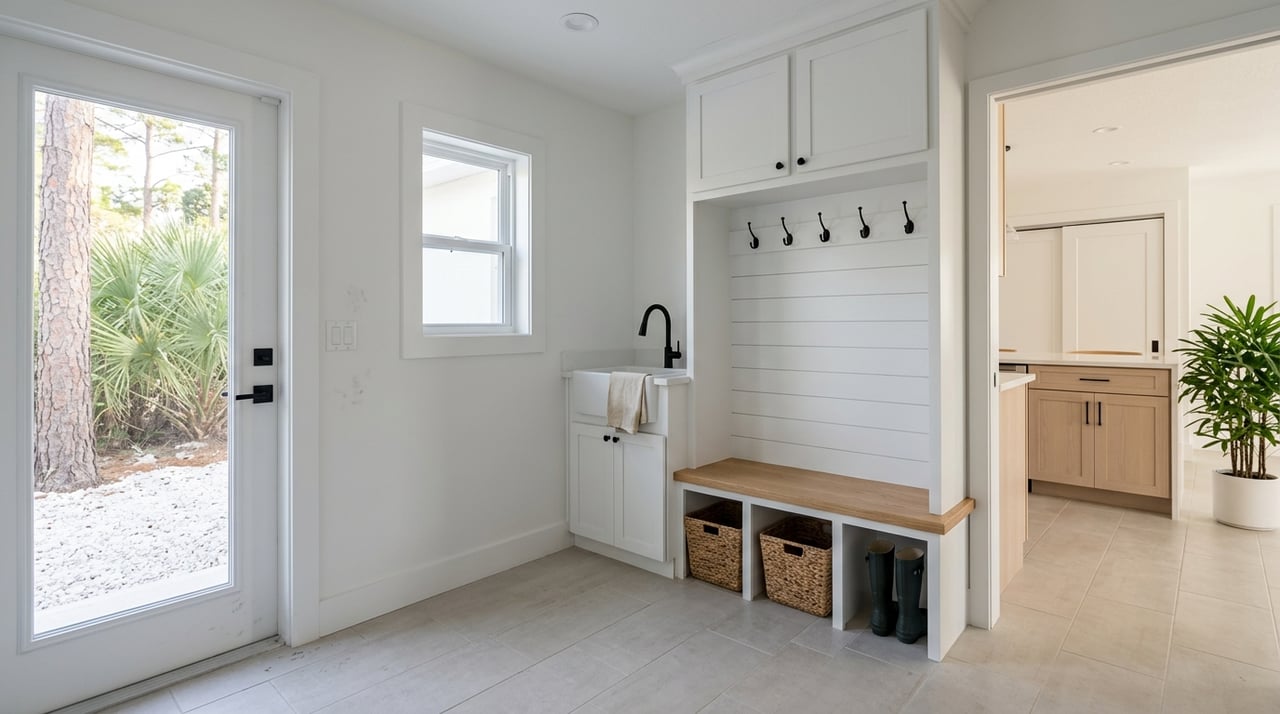
A better approach is to design around guest flow. Think about where suitcases land, where coolers and beach bags get dropped, where wet towels go, and how guests move from the driveway to the kitchen, laundry, and sleeping areas.
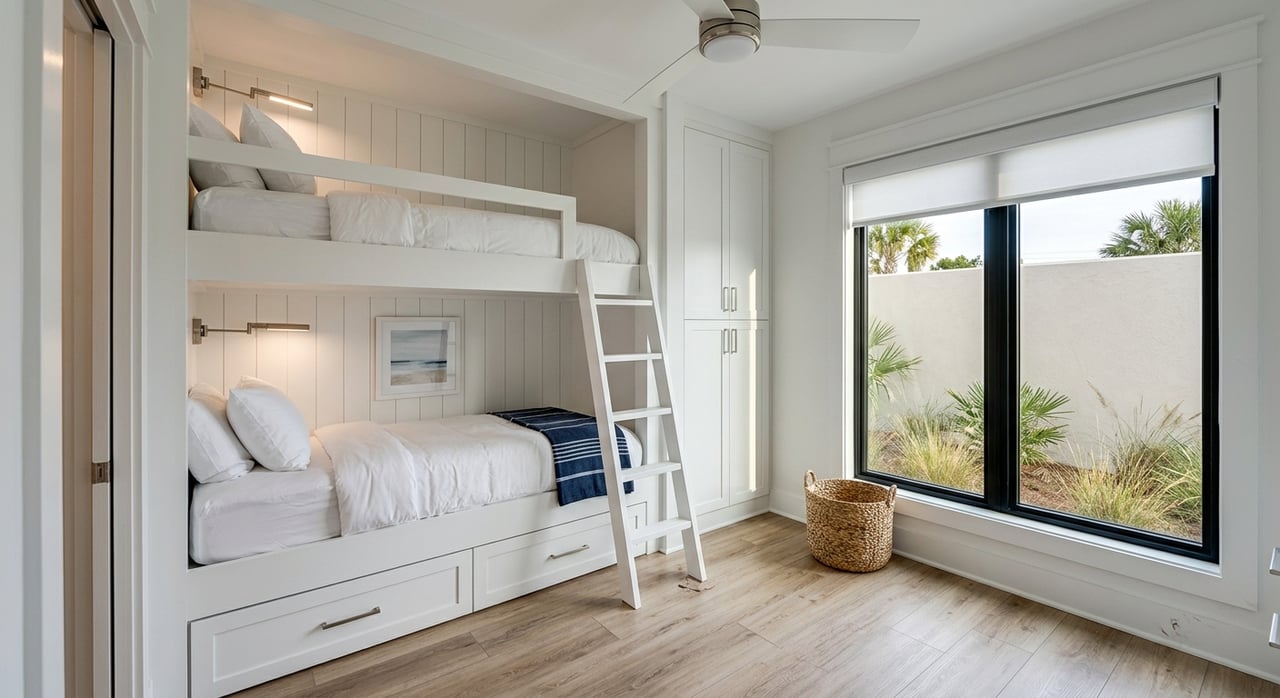
This is especially useful for family groups and mixed-age travelers. Bunk rooms, convertible dens, and flexible furniture layouts can support more practical sleeping arrangements without forcing every available space into a formal bedroom.
Plan arrival and unloading space
Short stays create frequent check-ins and check-outs. A rental-ready plan should make arrival easy, with a clear entry sequence, room for people to unload, and enough storage near the door for shoes, bags, and beach gear.
If you can reduce clutter at the front of the home, the entire layout works better. It also helps cleaners move faster between stays.
Build for cleaning and turnover
A coastal short-term rental lives a different life than a primary residence. The home needs to be comfortable for guests, but it also needs to support repeated cleaning, linen rotation, and quick resets.
That is why the back-of-house layout matters just as much as the living room or kitchen. A home that photographs well but lacks storage and laundry workflow can become difficult to manage.
Storage is not optional
Dedicated linen storage, owner storage, and utility storage make a real difference. You need a place to separate guest items from maintenance supplies, replacement inventory, and personal belongings.
This planning also aligns with state lodging expectations. DBPR’s vacation-rental guide references requirements tied to clean bedding, sanitized dishes or a posted exception notice if sanitizing facilities are not available, safe electrical systems, smoke detectors in every living unit, and NFPA 101 compliance.
Choose easy-care surfaces
In a high-turnover home, finishes should be selected with maintenance in mind. Durable flooring, easy-to-clean kitchen surfaces, moisture-tolerant materials, and practical trim details can help reduce wear and simplify upkeep.
That kind of thinking fits well with Tracewater Homes’ process and product approach. Adaptable floorplans paired with durable, performance-minded materials can help you build for both daily use and long-term ownership costs.
Prioritize wind and flood resilience
In coastal Okaloosa County, weather exposure is part of the design brief. Florida currently uses the 8th Edition 2023 Florida Building Code, effective December 31, 2023, and Okaloosa County points property owners to local tools for wind and flood review.
The county flood resources let you search a property’s flood zone, Base Flood Elevation, Design Flood Elevation, and substantial-improvement thresholds. The county’s wind-zone information also points users to updated hurricane wind analysis tools.
Review hazard data before final design
Flood and wind review should happen before the plan is locked in. Foundation approach, elevation strategy, exterior materials, roof details, and mechanical placement all become easier to solve when you understand the lot’s conditions from the start.
The county’s hurricane information notes that NOAA tracks tropical cyclones from May 15 through November 30. While that is not a design standard by itself, it reinforces the value of moisture-tolerant finishes, durable roof and envelope details, and systems suited to repeated storm exposure.
Think long term on maintenance
A short-term rental is not just a revenue property. It is also a building that may see frequent occupant turnover, more intensive cleaning, and exposure to salt air, sand, humidity, and storms.
That is why resilient construction matters. A home designed for Gulf Coast conditions can help reduce maintenance headaches over time, especially when paired with a documented building process and performance-focused materials.
Do not overlook signage and exterior layout
Exterior compliance can shape the design more than many buyers expect. In Destin, an 18 x 18 sign is required after registration, showing the management company, emergency contact, occupancy limit, and number of parking spaces.
That requirement should influence the site plan early. You want a reserved sign location, a clear arrival pattern, and a parking layout that makes sense for guests without crowding the front of the home.
Curb appeal still matters
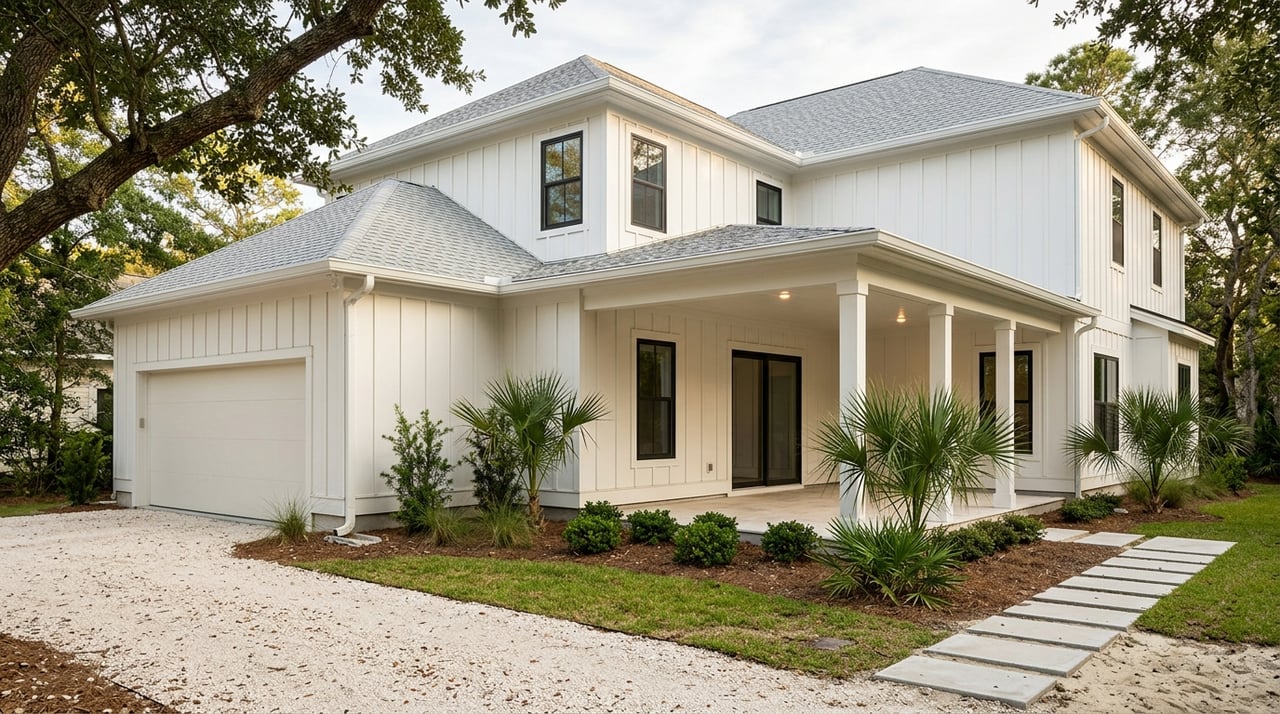
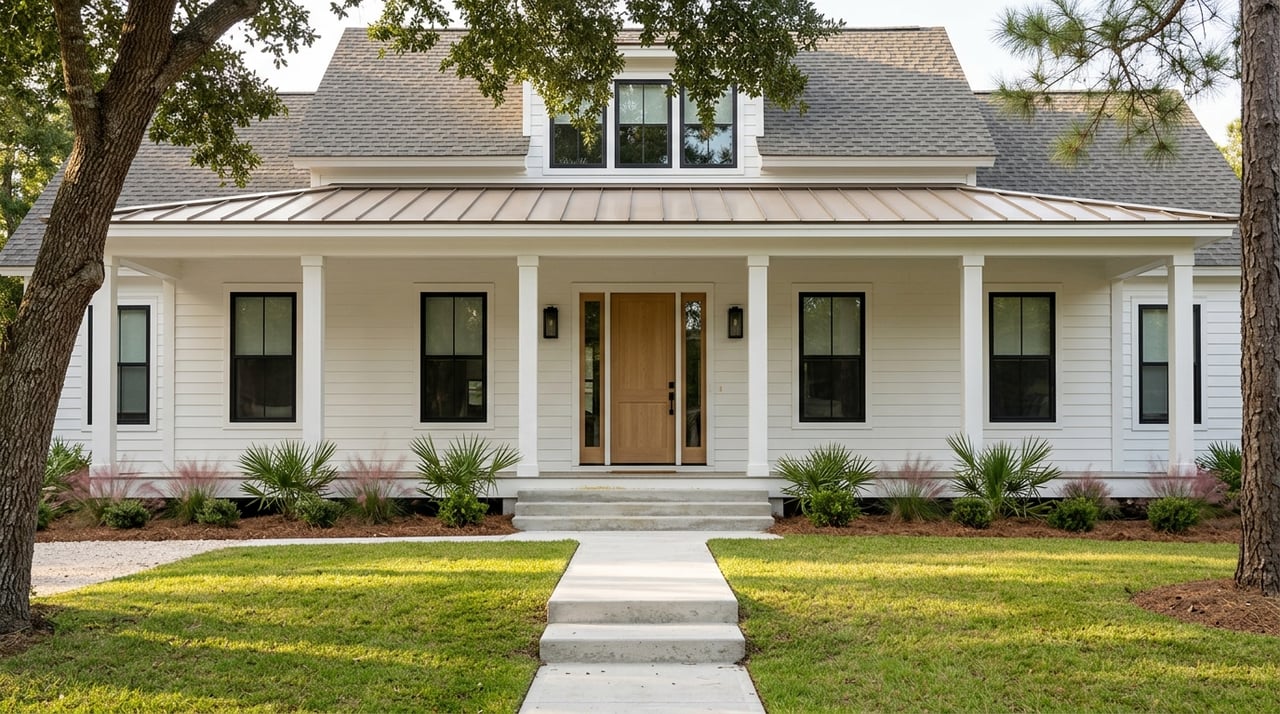
A rental-ready design does not mean giving up style. You can still create a polished coastal exterior with strong curb appeal while making room for parking, entry clarity, and operational needs.
The key is balance. Good design should support both guest experience and compliance.
Plan the operation before the first booking
The home itself is only part of the equation. Short-term-rental success also depends on how the property will be managed once construction is complete.
In Destin, the city says a local responsible party must be close enough to be present within one hour if needed. That makes local operations a real planning issue, not a task to figure out later.
Management setup matters early
If you plan to use a local property manager or another responsible party, coordinate that before closing and before the first guest stay. Destin also notes that registrations are non-transferable when management companies change or ownership changes.
That is a practical reason to think through your handoff process early. A smooth transition from build completion to setup, registration, and operations can save time and avoid disruption.
Build your recordkeeping system too
Okaloosa County says owners and operators must register and remit tourist development taxes through the county portal. Returns are due monthly, records should be kept for at least three years, and the clerk’s office may audit rental records with advance notice.
This means your back office needs structure. Tax records, lease records, receipts, and cleaning logs should be easy to organize and retrieve.
Budget with taxes in mind
Short-term-rental budgeting in Okaloosa County should include more than construction and furnishing costs. The county’s tourist development tax rate is 6% countywide, including the expanded district that became effective March 1, 2025.
The county government FAQ says the state sales tax in Okaloosa County is 7 percent. Taken together, that means a short-term rental in Okaloosa County carries a meaningful public-tax load before you even add platform costs, insurance, maintenance, or management fees.
Watch for homestead issues
The county also warns that homestead exemption issues can arise if the owner is not permanently residing in the dwelling or if the property is a rental, vacation home, or vacant property. That is especially important if you are buying a second home now and may convert it to short-term rental use later.
This is another reason to plan the ownership strategy early. The way you intend to use the home can affect more than design alone.
What a smart STR-ready build looks like
In Okaloosa County, a strong short-term-rental-ready new build usually does four things well. It supports the likely guest mix, fits the lot and local rules, holds up to coastal conditions, and makes turnover easier.
For many buyers, that means choosing an adaptable plan rather than simply the largest one possible. A well-planned home with flexible sleeping, durable materials, strong storage, practical parking, and a clear process can be more useful than a layout that adds square footage without solving operational needs.
If you are building on your own lot, that is where a repeatable building system can help. Tracewater Homes focuses on adaptable floorplans, resilient materials, and a documented building journey that can make it easier to align your lot, your design goals, and your long-term ownership plan.
Ready to explore what a short-term-rental-ready home could look like on your lot in Okaloosa County? Connect with Tracewater Homes to start your build.
FAQs
What makes Okaloosa County attractive for a short-term rental build?
- Okaloosa County has a large visitor economy, with more than $3.18 billion in annual visitor spending and about 8 million visitors each year, which supports demand for short-stay lodging.
What short-term rental rules apply in Destin, Florida?
- Destin requires annual short-term-rental registration, uses an occupancy formula of 2 adults per bedroom plus 4 additional persons with a hard cap of 24 overnight guests, and requires a posted sign with management, contact, occupancy, and parking information.
What should you verify before designing a short-term rental home in Okaloosa County?
- You should confirm whether the lot is in Destin, Fort Walton Beach, or unincorporated Okaloosa County, and review any parcel-specific covenants or restrictions before finalizing the floorplan.
How should a new build in Okaloosa County be designed for short-term rental guests?
- The plan should emphasize flexible sleeping, clear guest flow, easy unloading, practical storage, efficient laundry and cleaning workflow, and enough parking to support the allowed occupancy.
Why do flood and wind conditions matter for a new build in Okaloosa County?
- Okaloosa County provides property-level flood and wind review tools, and those conditions can affect elevation strategy, foundation design, exterior materials, roof details, and long-term maintenance planning.
What taxes should short-term rental owners expect in Okaloosa County?
- Short-term rental owners should account for a 6% county tourist development tax and a 7% state sales tax in Okaloosa County, along with any other operating costs tied to the property.
Can you claim homestead exemption on a short-term rental in Okaloosa County?
- The county warns that homestead exemption issues can arise if the property is not your permanent residence or if it is used as a rental, vacation home, or vacant property.